
Short answer: Is crypto halal or haram? Scholars disagree, so there is no single answer. Of 17 rulings and papers checked here, 9 forbid crypto, 7 allow spot buying with conditions and 1 is still open. Futures and margin face far wider objection. This page lays out both sides with dates and links, and gives no verdict.
Karachi, summer 2026. A fatwa from Darul Ifta, Jamia Darul Uloom Karachi said crypto is not wealth in Shariah. It is dated June 10, 2026, and Dawn reported it on July 11.
Five weeks later, a second voice spoke in the same city. The chairman of Saylani Welfare said his body had issued a fatwa the other way 13 months earlier. Daily Pakistan reported this on July 16, 2026.
Same city, same summer, opposite answers. If you feel confused, that is a fair reaction to a real split among scholars.
So this page does one job. It shows who said what, when, about which product, and why. Spot, futures and margin are treated one by one, because scholars do not treat them the same way.
Please read this first: this page is information, not a fatwa and not financial advice. Rulings can change. Some bodies say their study is still going on. For your own case, ask a trained mufti you trust. Crypto trading is risky and you can lose money.
Key takeaways
- There is no consensus. Of 17 sources with a view on spot crypto, 9 forbid it, 7 allow it with conditions and 1 is still open. This counts the sources checked here, not all scholars.
- Where crypto is allowed, it is spot. No allowing source we opened stretches its view to futures or leverage.
- Futures and margin get the least support. We found no named body or scholar that allows crypto futures, perpetuals or interest based leverage.
- Two major Karachi seminaries rule against crypto. Darul Uloom Karachi and Jamia Banuri Town both say crypto is not maal. A Saylani fatwa is reported on the other side.
- Halal and legal are two separate questions. A fatwa is not a law, and a licence is not a fatwa.
Why scholars disagree: the 5 questions behind every ruling
Scholars split because they answer five basic questions in different ways. Know these five, and each fatwa below gets easier to read.
1. Is crypto maal? Maal means wealth that Shariah counts as real property. A sale needs maal on both sides. If a coin is not maal, the sale itself fails.
2. Is it thaman? Thaman means price or money, the thing you pay with. Some scholars say only a state can issue money. Others say money is whatever people widely accept.
3. How much gharar is there? Gharar means too much doubt in a deal. Wild price swings, unknown issuers and weak rules are the cases scholars name most.
4. Does it turn into maysir or qimar? Both words mean gambling. The worry is trading that works like a bet on price, with no real exchange of goods.
5. Is there riba, and is there qabz? Riba means interest. Qabz means possession: taking real control of what you bought before you sell it. A related term is bay al-dayn, the sale of a debt, which matters for contracts settled later.
The global bodies have not settled these points either. Take the International Islamic Fiqh Academy, the fiqh body of the Organisation of Islamic Cooperation. In November 2019 its Resolution 237 asked: “Is cryptocurrency considered by Shariah, a real value and a tradable item?” It gave no ruling and recommended “pursuing research and studies on issues affecting its ruling”.
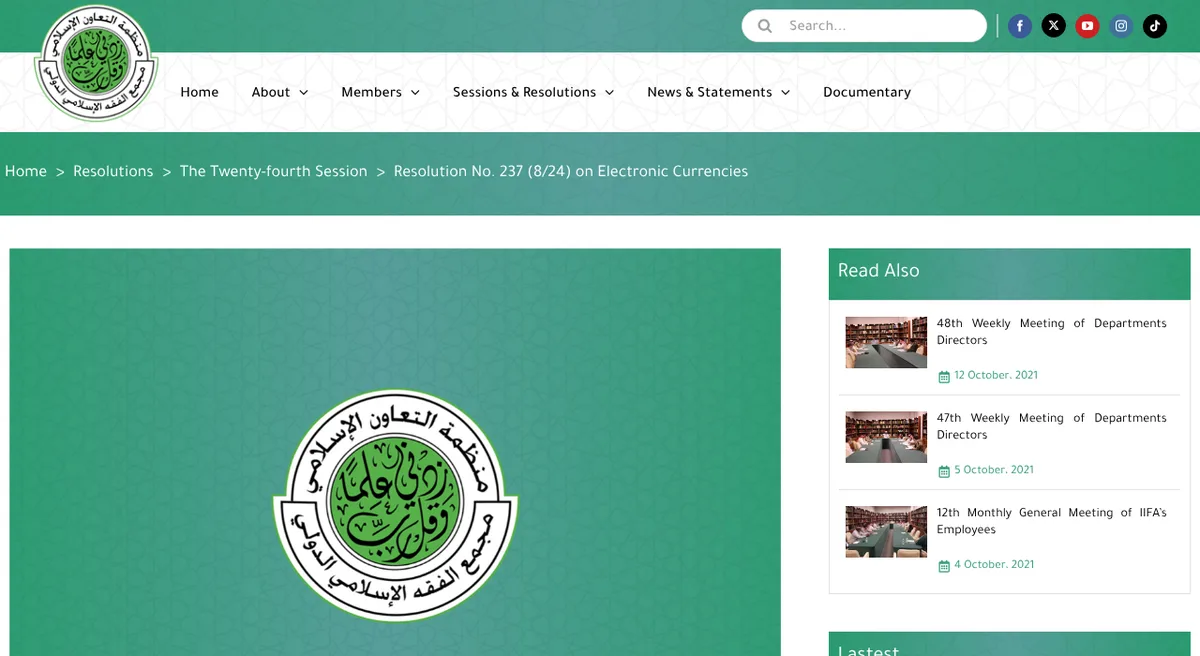
The screenshot shows the resolution page on the Academy’s own site, iifa-aifi.org, taken on 24 November 2026. A follow up symposium met in Jeddah on 8 November 2021. It heard 15 research papers and sent its advice to the Council, says its closing statement. We found no final ruling on its site on 24 November 2026.
The chart below maps 19 named sources against the three products. Gold means allowed with conditions. Blue means forbidden. A dashed box means undecided.
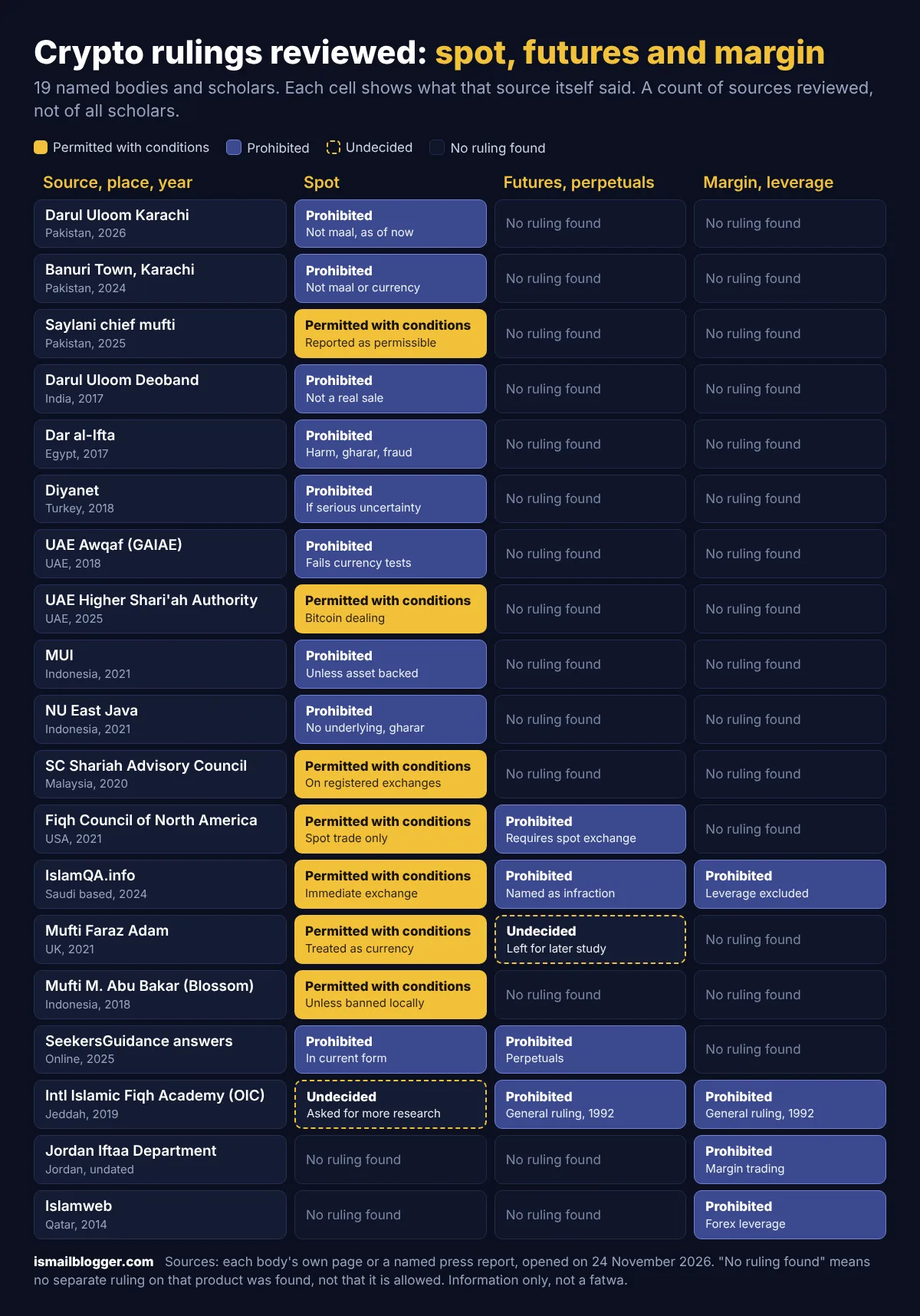
Our own chart, built from the rulings linked in the table below. Each was opened on 24 November 2026. The first of them is the Academy’s own text.
Is crypto halal or haram? 19 positions at a glance
This table lists every source checked, with the year, the exact subject and the main reason given. Read the “ruled on” column closely. Many rulings cover only one question. Two of the 19, Jordan and Islamweb, speak only about margin, so the spot count below uses 17.
| Body or scholar | Country | Year | Ruled on | Position, in summary | Main reason given | Source |
|---|---|---|---|---|---|---|
| Darul Ifta, Jamia Darul Uloom Karachi | Pakistan | 2026 | Paying for goods with crypto, incl. USDT | Not permissible; crypto not maal “so far” | Seen as numbers in an account, not wealth | Dawn (press) |
| Jamia Uloom Islamia, Banuri Town | Pakistan | 2024 | Crypto dealing, investing, business | Not permissible | No physical form, no possession; not currency or maal | Banuri |
| Mufti Waseem Akhtar Al-Madani, Saylani | Pakistan | 2025 | Cryptocurrency in general | Reported as permissible | Fatwa text not found | Daily Pakistan (press) |
| Darul Uloom Deoband | India | 2017 | Bitcoin trade and investing | Not permissible | Not a real sale; likened to interest and gambling | Mirror |
| Dar al-Ifta (fatwa 4205) | Egypt | 2017 | Buying, selling, leasing bitcoin | Prohibited | Harm, gharar, fraud risk, no state oversight | Dar al-Ifta |
| Diyanet, High Board of Religious Affairs | Turkey | 2018 | Use of digital crypto money | Not permissible where there is serious uncertainty | Deception risk, no guarantee, unjust enrichment | TRT (press) |
| General Authority of Islamic Affairs (fatwa 89043) | UAE | 2018 | Bitcoin, electronic currencies | Not permissible if outside Shariah and legal criteria | Fails tests for currency and for commodity | Legal 500 |
| Higher Shari’ah Authority | UAE | 2025 | Dealing in bitcoin | Reported as permissible | Resolution text not opened | Fitch (press) |
| Majelis Ulama Indonesia (MUI) | Indonesia | 2021 | Crypto as currency and as commodity | Prohibited, unless it has an underlying and clear benefit | Gharar, harm, qimar | MUI |
| Nahdlatul Ulama, East Java | Indonesia | 2021 | Cryptocurrency trading | Prohibited | No underlying asset, extreme gharar, regulation | NU Online |
| Securities Commission Shariah Advisory Council | Malaysia | 2020 | Digital currency and tokens it regulates | Recognised as mal; trading on registered exchanges permitted | Has value, can be traded | SC Malaysia |
| Fiqh Council of North America | USA | 2021 | Buying, selling, mining bitcoin | Permitted; same rules as fiat money | Objections “not strong enough” to prohibit | FCNA |
| IslamQA.info | Saudi based | 2024 | Dealing in crypto | Permitted if exchange is immediate; no leverage, no futures | Conditions of a valid exchange | IslamQA |
| Mufti Faraz Adam | UK | 2021 | Bitcoin | In the ruling of a currency; futures left for later study | People use and exchange it | Darul Fiqh |
| Mufti Muhammad Abu Bakar | Indonesia | 2018 | Bitcoin and crypto | Generally permissible, except where banned locally | Customary money by wide acceptance | Blossom |
| SeekersGuidance answers | Online | 2025 | Trading bitcoin; perpetual contracts | Prohibited in current form; perpetuals impermissible | Uncertainty; no real ownership in perpetuals | Seekers |
| International Islamic Fiqh Academy (OIC) | Saudi Arabia | 2019 | Crypto status; futures and margin in general (1992) | Crypto undecided; futures and interest loans not permitted | Needs research; both sides deferred; riba | IIFA |
| General Iftaa Department | Jordan | undated | Margin trading in general | Forbidden | No real holding; lender benefits from loan | Mirror |
| Islamweb | Qatar | 2014 | Forex leverage, incl. “no interest” accounts | Not permissible | A loan that benefits the broker | Islamweb |
Two things stand out. First, the oldest rulings, from 2017 and 2018, mostly forbid crypto. Most views that allow crypto came from 2020 onward. Second, the June 2026 Karachi fatwa broke that pattern, so no one can call the matter settled.
Spot trading: the strongest case for yes, and the case against
Spot trading means you pay in full and receive the coin at once. It is where the allowing side is strongest. It is not agreed upon by all.
Here is the count. We opened rulings and papers from 17 named bodies and scholars that take a stand on spot crypto. Seven allow it with conditions. Nine forbid it, and three of those nine state an exception. One is still open.
Of 17 sources checked here, 7 allow spot crypto with conditions, 9 forbid it and 1 is still open. This counts the sources checked, not all scholars. Among the sources that allow crypto, none we opened extends that to futures or leverage.
Many readers have heard that almost every scholar accepts spot trading. The sources checked here do not support that. What they do support is narrower. When a scholar allows crypto, it is spot that he allows.
What the allowing side says
The allowing side treats a coin as maal, because people value it and can trade it. Malaysia’s Securities Commission Shariah Advisory Council resolved in 2020 that “Digital currency is recognised as mal from Shariah perspective”. The line is in its published resolutions.
The same text has limits. It covers trading on exchanges registered with that regulator. It also says it “is not applicable to any Digital Assets which are outside the jurisdiction of SC”.
In North America, the Fiqh Council wrote that objections such as anonymity and price swings “are not strong enough to warrant a verdict of impermissibility”. Its ruling was published on 6 October 2021.
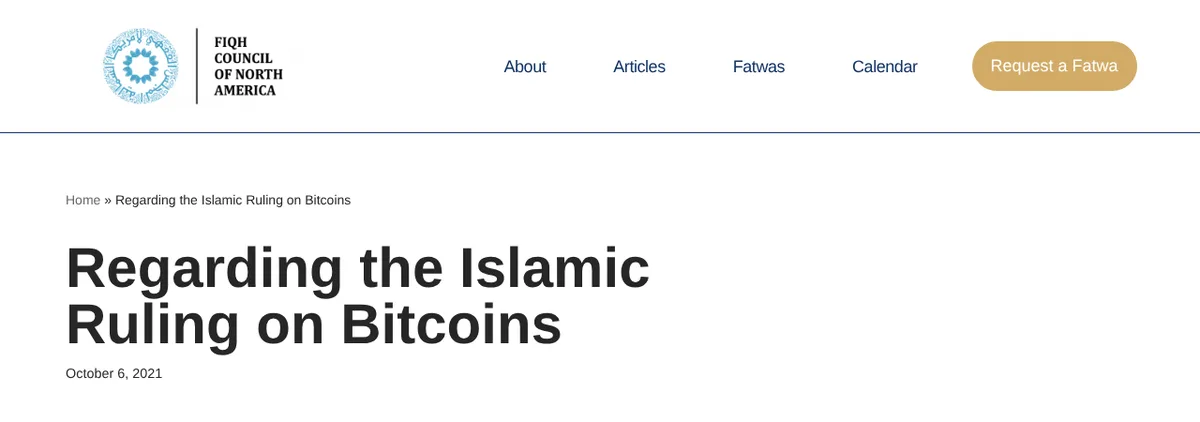
The screenshot shows the top of that ruling on fiqhcouncil.org, taken on 24 November 2026.
IslamQA.info, a Saudi based fatwa site, shows how views can move. In September 2021 it wrote that “the facts of the matter are not clear to us, so we are unable to issue a fatwa”. In an answer dated 26 July 2024 it wrote: “It is permissible to deal in crypto currency, if the exchange takes place immediately”.
Two single scholars are often cited too. Mufti Faraz Adam concluded in 2021 that “Bitcoins are in the ruling of a currency”. Mufti Muhammad Abu Bakar’s 2018 paper for Blossom Finance called bitcoin “generally permissible under Shariah”, except where a government bans it. Blossom is a company, and the paper was its own commissioned work.
Terms the allowing scholars attach
The yes always comes with terms. In the five allowing texts we could open in full, these come up again and again:
- Immediate exchange. The Fiqh Council says exchange “must be done as a spot-trade at the current rate of exchange”.
- No riba. The Fiqh Council says all the rules of riba apply to bitcoin, as they do to cash.
- No leverage, no futures. IslamQA.info lists both as infractions.
- A lawful project. Malaysia’s council says a token’s rights and benefits “must be Shariah-compliant”.
- A lawful venue. Malaysia limits its ruling to registered exchanges. Mufti Abu Bakar’s paper excludes countries that ban crypto.
What the forbidding side says
The forbidding side says the sale fails at the first step, because a coin is not maal. The Karachi fatwa, as quoted by Dawn, reads: “According to research and opinion of experts so far, cryptocurrency is not considered ‘maal’ (wealth) in Sharia.”
Egypt’s Dar al-Ifta went further in fatwa 4205, dated 28 December 2017. In summary, it ruled against buying, selling and leasing bitcoin. Its reasons were harm to the economy, loss of legal cover, gharar, and fraud risk. The Arabic text is on its website.
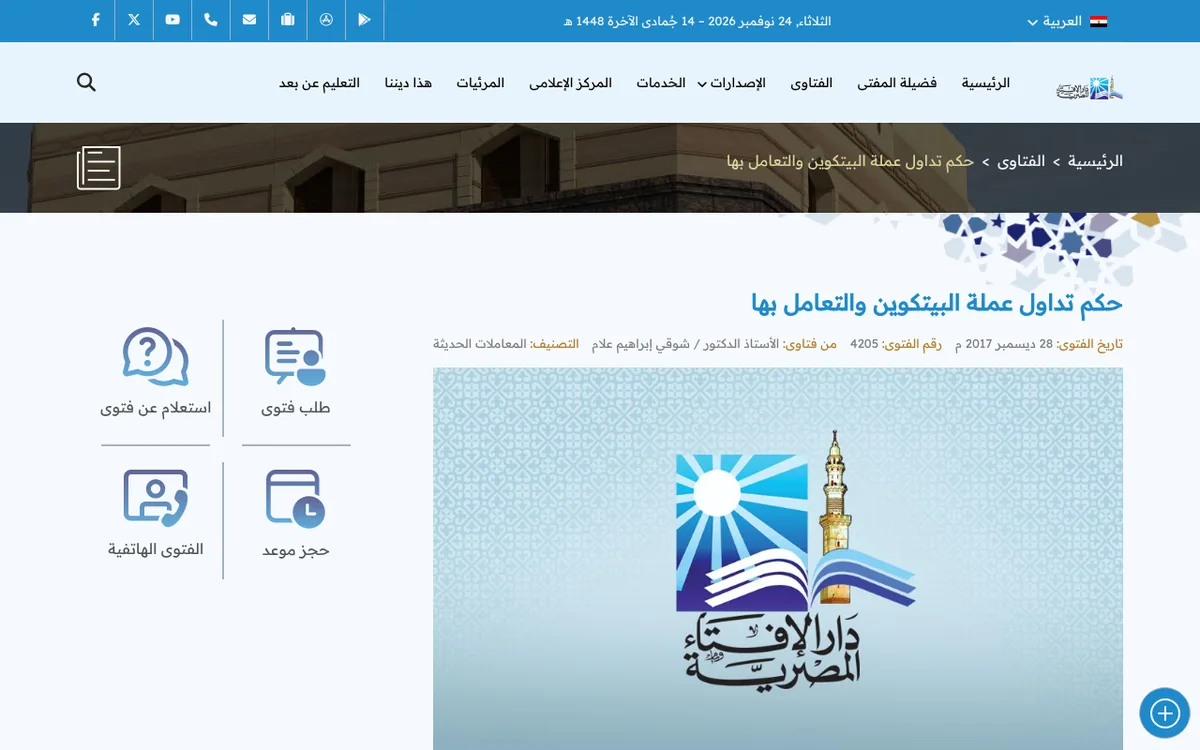
The screenshot shows fatwa 4205 on dar-alifta.org, with its date of 28 December 2017, taken on 24 November 2026.
Darul Uloom Deoband took the same line in October 2017. An English summary by a Hanafi board says such trade “does not really involve” an actual sale, and likens it to interest and gambling.
Three of the nine leave a door open. Indonesia’s MUI rejects unbacked coins. It accepts a crypto asset with an underlying and a clear benefit, as its own site restated on 20 November 2026.
Turkey’s Diyanet aimed its statement at coins with serious uncertainty, TRT Haber reported on 1 January 2018. A 2025 SeekersGuidance answer says there is “conditional permissibility if risks are mitigated”.
Futures and perpetuals: almost no support found
A futures contract is a deal to buy or sell later at a price fixed today. A perpetual is a futures contract with no end date. We found no named body or scholar that allows either for crypto.
The doubts are older than crypto. In May 1992 the Fiqh Academy studied organised markets. Its Resolution 63 looks at a contract with future delivery and future payment. It rejects it “because of the postponement of the two elements of the exchange”.
The same text covers the common case, where the contract is closed by an opposite trade and nothing is delivered. It calls that type “essentially not permissible by Shariah”. This is a general ruling on futures. It does not name crypto.
Three arguments come up most often:
- Selling what you do not own. A SeekersGuidance answer of 2 October 2025 says perpetuals stay impermissible “because they do not involve actual ownership of the underlying asset”.
- Both sides deferred. Price and goods are both delayed, which scholars link to bay al-dayn, a debt sold for a debt.
- Maysir. With no delivery, critics say the trade becomes a bet on price.
Funding fees add a fourth worry. On perpetuals, traders pay or receive a fee every few hours to hold a position. We found no ruling from a named body on funding fees as such. That is a question to take to a scholar.
Even the allowing sources stop here. IslamQA.info lists “using financial leverages and dealing in differences, futures and so on” as infractions. Mufti Faraz Adam wrote that his view “does not incorporate Bitcoin futures and derivatives”.
Does any body allow futures at all? One, outside crypto. Malaysia’s Shariah Advisory Council has accepted crude palm oil futures as Shariah compliant, according to a New Straits Times report of 26 August 2022. That is about a physical good on a regulated exchange. We found no such ruling for crypto futures.
Margin and leverage: the riba question
Margin trading means you borrow from the exchange to open a bigger position. Leverage is the size of that loan against your own money. Each source we found on this point rejects it when the loan earns the lender a gain.
The Fiqh Academy’s 1992 text states the core point. “It is not permissible to purchase a share with an interest-based loan offered to the purchaser by the broker”, it says. It calls this a riba transaction secured by a pledge.
Jordan’s General Iftaa Department gives two reasons in its answer on margin trading. There is “no actual or constructive holding” of the asset, and the broker benefits from the money it lends.
What about “Islamic” or swap free accounts?
Some platforms sell “Islamic” or swap free accounts that remove the overnight interest charge. Scholars do not all accept that fix.
In a fatwa dated 8 August 2014, Islamweb answered a trader who used a “no-interest” forex account. Its answer still rejected leverage, because it is “a loan that brings benefit for the broker”. The broker earns from the larger trades the loan makes possible.
That fatwa is about forex, not crypto. The reasoning is about the loan, so readers should ask a scholar whether it applies to their platform. A product’s “Islamic” label comes from the seller or its paid advisers. It is not a fatwa from an independent body.
There is also a plain money risk. In the first half of 2026, the exchanges tracked by CoinGlass liquidated 73.35 billion US dollars of leveraged crypto positions. That is about 405 million dollars a day. A liquidation means the exchange closed the trade by force after losses.
Staking, mining and stablecoins: thinner coverage
Fewer rulings cover these three, so treat this section as a starting point only.
Mining. The Fiqh Council of North America says “It is permissible to mine Bitcoins and to be paid for one’s efforts in doing so”. Jamia Banuri Town took the other view in a fatwa of 23 January 2021. In summary, it told people to stay away from mining and trading until trusted muftis agree.
Staking. We found no ruling on staking from a national fatwa body. Islamic Finance Guru is a UK firm of analysts, not a fatwa body. It writes that staking “can be” halal, based on how the reward is earned. Its guide separates staking from lending.
Stablecoins. The Karachi fatwa names USDT and treats it like other tokens. Malaysia’s council takes another route. A coin backed by gold, silver or cash is treated as money. So the rules of bay al-sarf (money exchange) apply. Indonesia’s MUI also accepts asset backed crypto.
What Pakistani scholars and institutions have said
In Pakistan, two major Karachi seminaries rule against crypto. A Saylani fatwa is reported to allow it. The state regulator is in talks with scholars.
Darul Uloom Karachi. The fatwa is dated 24 Zilhaj 1447 AH, or June 10, 2026. Mufti Muhammad Taqi Usmani and five other scholars signed it, Dawn reported. It answered a question about paying for books and a course with crypto. We could not find the fatwa on the seminary’s own website, so this rests on press reports.
Two details matter. The fatwa says “so far”. And Dawn’s magazine reported on 4 October 2026 that the seminary is holding webinars and expert talks to “further strengthen and refine” its research.
Jamia Banuri Town. Its online fatwa of 11 March 2024 says, in summary, that crypto has no physical form and no possession. It adds that crypto cannot be called currency or maal, so dealing or investing in it is not allowed.
The seminary does not let others republish its fatwas. Please read the Urdu original on its own site, linked in the table above.
Saylani Welfare. Chairman Maulana Bashir Farooq Qadri said Saylani issued a fatwa calling crypto permissible 13 months before July 2026. He said it was shared with the Council of Islamic Ideology and the State Bank.
Bloomberg reported on 16 July 2026 that the edict came from Mufti Waseem Akhtar Al-Madani. We could not find the fatwa text, so its conditions are unknown to us.
Council of Islamic Ideology. We found no published opinion from the Council on crypto as of 24 November 2026.
PVARA. PVARA is the state body that regulates crypto. Its chairman, Bilal bin Saqib, met Mufti Taqi Usmani on 11 July 2026, Arab News reported. He later told Reuters the regulator wants assets judged by category, not as one class.
His words, carried by Geo on 16 July 2026: “The central question the fatwa raises is whether a digital asset constitutes recognised wealth under Shariah”. We found no published outcome of those talks on 24 November 2026.
The numbers behind the debate
The figures show a large market and a split set of rulings. They also show a trading mix tilted toward the products scholars object to most.
Rulings. A 2025 academic study examined 32 public fatwas issued from 2014 to 2024 in 12 jurisdictions. It counted 17 as outright bans (53%), 10 as a yes with conditions (31%) and 5 as neutral (16%).
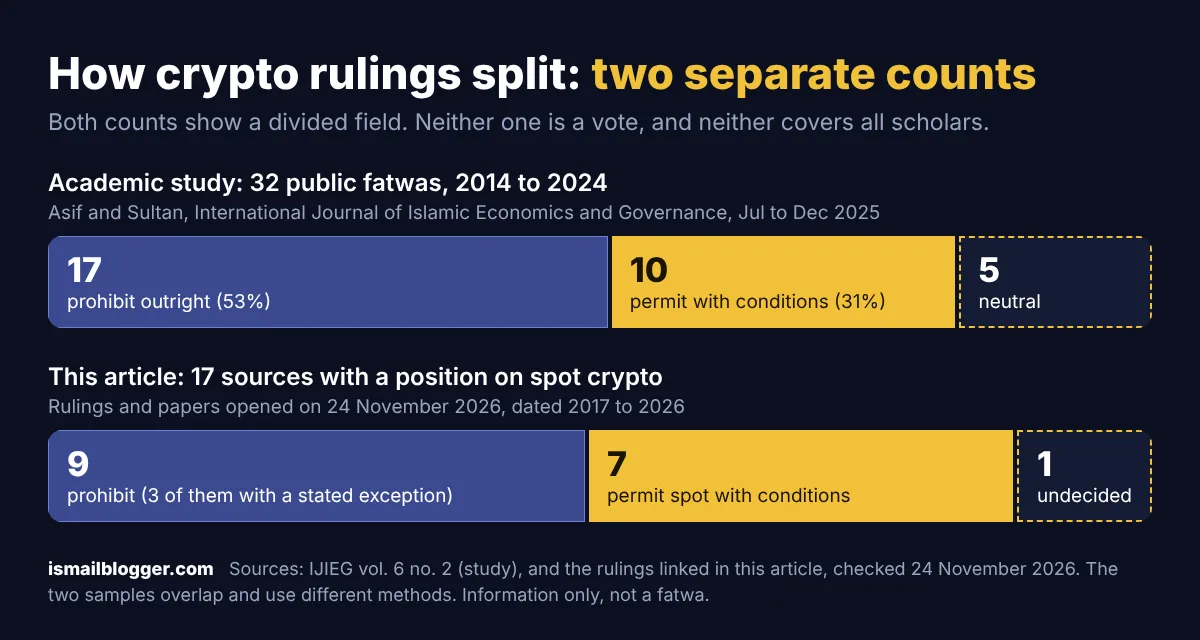
Our own chart. The first bar uses the figures in the study by Asif and Sultan. The second bar is the count from this page. Both were checked on 24 November 2026.
One caution on that study. Its table lists the Fiqh Academy’s 2019 resolution as “Prohibited”. The resolution’s own text asks for more research and gives no ruling. Counts depend on who reads the fatwa. That is one more reason to read the originals.
Pakistan’s place. Pakistan ranked third in the 2025 Global Crypto Adoption Index by Chainalysis. In the 2026 edition, published on 23 September 2026 with a new method, Pakistan is not in the top 20. Indonesia is 14th and Türkiye 20th.
Users. PVARA’s chairman told a Senate committee that Pakistan has some 40 million crypto accounts, Dawn reported on 4 October 2026. That is an official’s claim, not an audited count.
Islamic finance. Global Islamic finance assets reached 6.5 trillion US dollars in 2025, up 9% in a year. That is from the ICD and LSEG report of October 2026. Crypto rulings will shape how much of that money ever touches digital assets.
Futures share. In February 2026, big exchanges handled 1.50 trillion dollars of spot trades and 4.11 trillion dollars of derivatives, says CoinDesk Data. By that count, about 73% of trading was in derivatives.
Put the last figure next to the rulings. The form of trading with the most scholarly support is the smaller part of the market.
Halal and legal are two separate questions
A fatwa is a religious opinion, and a law is a state rule. Neither one answers the other.
On the legal side, crypto is not legal tender in Pakistan. Under the Virtual Assets Act, 2026, a business that offers crypto services to people in Pakistan needs a PVARA licence. PVARA’s own FAQ says a No Objection Certificate “does not constitute a license”. The full picture is in our guide: is crypto legal in Pakistan.
Two practical points follow. You can check any platform’s status with the free PVARA licence checker. And paying strangers through a bank account or wallet is a risk, never a method; the Binance P2P risk explainer shows why accounts get frozen.
How to decide for yourself: 8 questions to take to a scholar
A good question gets a clear answer. These eight come straight from the points where scholars split. They are a checklist, not a ruling.
- In your view, is this coin maal? Does your answer change for bitcoin, a stablecoin, or a token backed by a real asset?
- Do you follow a ruling that forbids crypto, such as Darul Uloom Karachi’s? If so, does it cover holding, or only paying with it?
- If you allow spot buying, on what terms?
- Does it matter whether the platform is licensed in Pakistan?
- Is frequent buying and selling treated differently from buying and holding?
- What is your ruling on futures and perpetuals, including the funding fee?
- What is your ruling on leverage, and on accounts sold as “Islamic” or swap free?
- If someone already holds crypto, what should that person do with it, and is zakat due?
Bring facts with you. Name the exact product, how it is settled, and what fees you pay. A scholar can only rule on what he is told.
If you still plan to learn trading after that talk, start with how the market works and what it can cost. Our plain guide to crypto trading in Pakistan covers the risks first.
A reminder before the questions below: nothing on this page is a fatwa, and nothing here tells you to buy, sell or trade. Rulings quoted were checked on 24 November 2026 and can change. Please take your own case to a qualified mufti you trust.
Frequently asked questions
Is crypto halal or haram in Islam?
Scholars are divided. Of 17 sources checked here, 9 forbid crypto, 7 allow spot buying with conditions and 1 is still open. The split turns on two things: whether a coin counts as maal (wealth), and how much gharar (doubt) the trade carries.
Crypto halal hai ya haram?
Ulama ka is par ittefaq nahi hai. Darul Uloom Karachi aur Jamia Banuri Town ke fatwe ise najaiz kehte hain. Malaysia ki Shariah Advisory Council aur Fiqh Council of North America sharton ke sath spot ki ijazat deti hain. Apne masle ke liye kisi mustanad mufti se poochein.
Is crypto trading halal in Pakistan?
Pakistani scholars do not agree. Darul Uloom Karachi (June 2026) and Jamia Banuri Town (March 2024) both ruled against it, while a Saylani fatwa is reported to allow it. The law is a separate matter. It sits with PVARA and the Virtual Assets Act, 2026.
Is spot trading halal?
Spot is where a yes is most common, but not all agree. Seven of the 17 sources checked allow spot with conditions such as immediate exchange, no interest and no leverage. Nine forbid crypto in any form, three of them with an exception.
Is futures trading halal?
We found no named body or scholar that allows crypto futures or perpetuals. The Fiqh Academy’s 1992 text rejects deals where both the goods and the payment are delayed. IslamQA.info allows spot crypto but lists futures as an infraction.
Is margin trading haram?
Each source we found on margin rejects it when the lender gains from the loan. The Fiqh Academy calls buying with a broker’s interest based loan a riba transaction. Islamweb rejected leverage even on a “no-interest” forex account, because the broker still gains from the loan.
Is bitcoin halal according to Mufti Taqi Usmani?
He signed the June 10, 2026 fatwa with five other scholars. It says crypto is not maal “so far”. It also says paying for goods with it is not allowed. Dawn reported in October 2026 that the seminary’s research is continuing.
Is zakat due on crypto?
Scholars who treat crypto as wealth say yes. The Fiqh Council of North America writes that zakat is due on bitcoin held for an Islamic year above the nisab. Mufti Faraz Adam says the same. Scholars who do not count it as maal may answer differently, so ask your mufti. Our zakat calculator can help with the sums.
Is USDT halal?
It depends on whom you ask. The Karachi fatwa names USDT and does not treat it as maal. Malaysia’s council treats a currency backed coin as a currency, so currency exchange rules apply. PVARA has asked scholars to assess fully reserved stablecoins as their own category.
The decision is yours
The record is clear on one thing: scholars have not agreed. Spot buying has real support and real opposition. Futures and margin have almost no support in the sources checked here.
Read the rulings that matter to you in the original. Then take the eight questions above to a mufti you trust. If you also want the legal side, start with is crypto legal in Pakistan.
Keep reading
Related articles
 Crypto · 10 min readBitget Wallet in Pakistan and India (2026): Card, Safety and Legal StatusRead article →
 Crypto · 13 min readIs Binance Legal in Pakistan? Not Banned, Not Licensed (Nov 2026)Read article →
 Crypto · 21 min readBinance P2P in Pakistan 2026: Legal Status, Account Freezes and Real RisksRead article →














0 comments
No comments yet. Start the conversation!