Affiliate marketing in Pakistan means earning a commission when someone buys a product through your unique link. To start, pick one niche, join a free program whose payout can actually reach you (Hostinger pays up to 40% on eligible hosting sales by bank wire from US$500, and local programs such as Markaz pay in rupees), publish helpful tutorials, disclose your links, and read the payout terms before you create anything. Expect little or no income for about the first six months.
Affiliate marketing was my first real online income, back in 2013, and Hostinger became the program that taught me how it works at scale. I became one of their top performing affiliates in Pakistan, and later an early growth contributor for the brand in this market. This is the exact roadmap, without the hype, plus everything I wish someone had told me about getting paid and staying honest.
Key takeaways
- Affiliate marketing is free to start in Pakistan, but it is not fast. Plan for six months of content before real income.
- Hostinger’s program pays up to 40% on a customer’s first hosting purchase, uses a 30 day cookie, and pays commissions older than 45 days, with a US$100 minimum for PayPal and US$500 for bank transfer. PayPal has no presence in Pakistan, so plan around the bank transfer minimum.
- Tutorials convert better than reviews. Solve the problem first, then the product is the next step.
- Disclose every affiliate link clearly, close to the recommendation. YouTube and the US FTC both require it.
- Most lost commissions come from broken rules: buying through your own link, coupon bait videos, paid ads on the brand name, or refunds.
- Avoid “affiliate” schemes that ask you to pay a joining fee or recruit people. That is MLM, not affiliate marketing.
What is affiliate marketing and how does it work?
Affiliate marketing is a performance based arrangement where a company pays you a commission for sales or sign ups that come through your tracked link. You do not hold stock, handle delivery or provide support. Your job is to send the right buyer at the right moment.
Five terms you need to know before you join any program:
- Affiliate link: your unique URL that tells the company the buyer came from you.
- Cookie duration: how long after a click you still get credit. Hostinger’s is 30 days.
- Commission: the percentage or fixed amount you earn per approved sale.
- Hold or approval period: how long the company waits before a sale becomes payable, usually to cover refunds.
- Payout threshold: the minimum balance before you can withdraw.
Is affiliate marketing worth it in Pakistan in 2026?
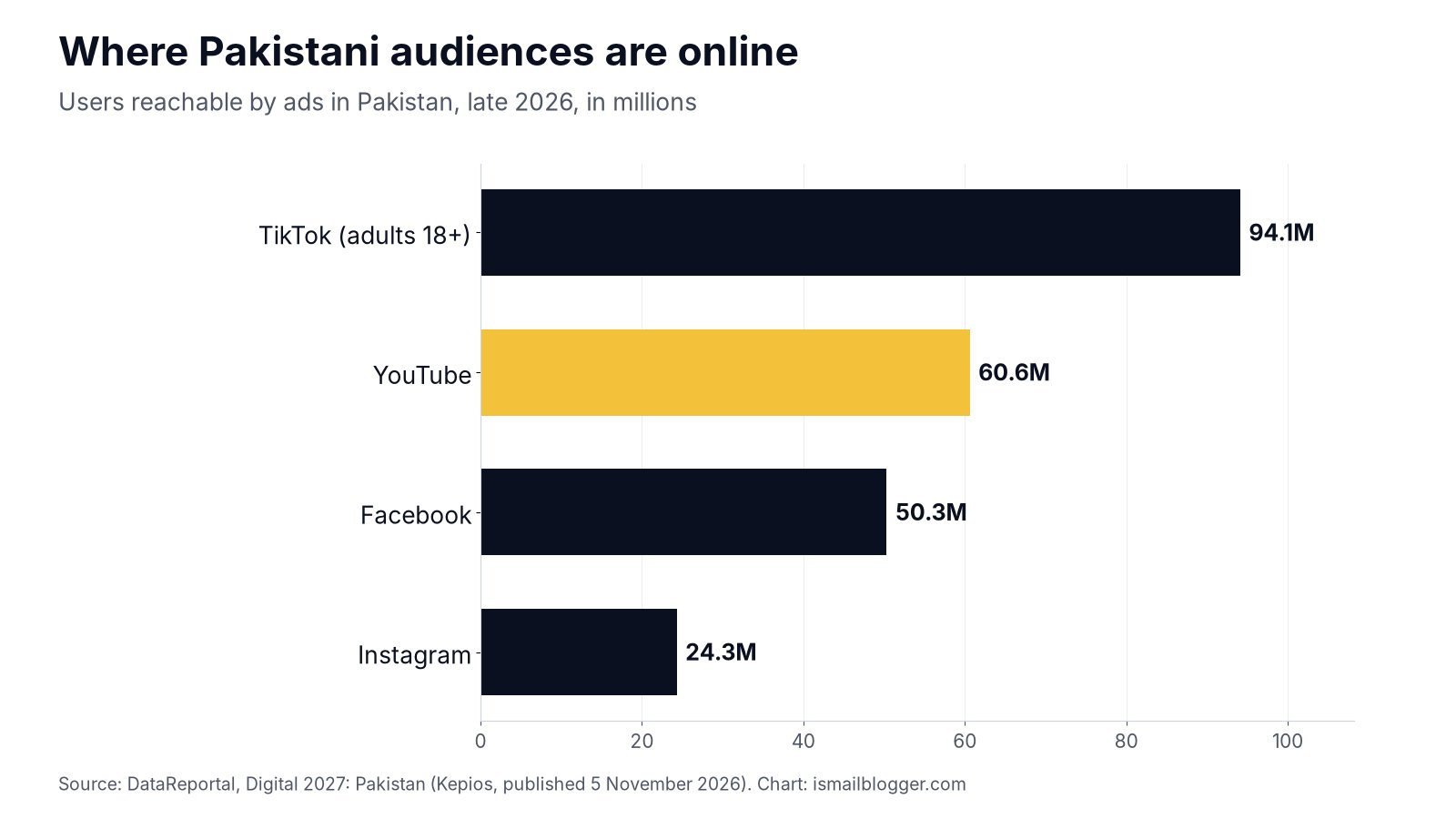
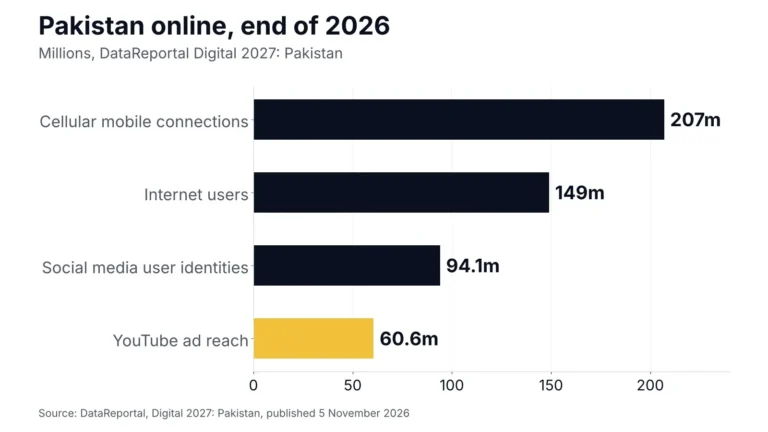
Yes, if you are willing to build content first. The audience is already online. According to DataReportal’s Digital 2027: Pakistan report, Pakistan had 149 million internet users in October 2026 and YouTube had 60.6 million users in the country in late 2026. That is a huge Urdu speaking audience searching for how to do things online.
The catch is that most of the money in affiliate marketing is paid in dollars by global companies, while most Pakistani buyers pay in rupees. So you have two paths: promote global products to global or Pakistani buyers who pay by card, or promote local ecommerce products that pay in PKR. Both work. Hosting and software were my path because the commissions are higher.
My Hostinger journey: what actually worked
Why hosting affiliates work
Everyone who wants a website needs hosting. The purchase is small, the decision is quick, and commissions are high relative to the price. More importantly, it is a product I used and could recommend without lying. That matters more than any tactic below.
Step one: solve the problem before the product
Nobody searches for a hosting company. They search for how to start a blog, how to make a website for a business, how to install WordPress. My content answered those questions completely, and the hosting link was simply the next step. Tutorials convert. Reviews with no tutorial rarely do.
Step two: build around one language and one market
My advantage was Urdu and Pashto speaking audiences who had no good guides in their language. Global affiliates ignored them. I did not. If you are in Pakistan, your edge is not competing with American YouTubers in English. It is serving the people they cannot reach.
Step three: multiply the touchpoints
- A YouTube tutorial with the link in the description.
- A blog post ranking for the same keyword, with a comparison table.
- A WhatsApp community where people ask setup questions and get the link again.
- Workshops where I set up a website live on stage.
If you want to build that kind of group, I explain how in my guide to building a digital community that actually grows.
Step four: track and double down
I checked the affiliate dashboard weekly and noticed which video drove sales. Then I made five more videos like it. Most affiliates publish randomly and never look at data. Looking is the whole advantage.
How to start affiliate marketing in Pakistan: step by step
- Pick one niche you can teach. Websites and hosting, freelancing tools, AI tools, tech gadgets, books, beauty or home products. Choose something you already use and understand.
- Choose one platform to publish on. YouTube, a blog, TikTok or a WhatsApp channel. A blog plus YouTube is the strongest combination because both are searchable for years.
- Join one or two programs that can pay you. Read the payout terms before you create content. If a program cannot pay a Pakistani bank account or Payoneer, skip it. If it wants an audience first, build the audience and apply later.
- Create problem solving content. “How to make a website in Urdu” beats “Best hosting company”. Put your link at the step where the reader needs the product.
- Disclose every link. One clear sentence near the link. More on this below.
- Track clicks and conversions weekly. Use the program dashboard and a link tracker. Double down on what sells.
- Add a second program only after the first one pays. Diversify once something works, not before.
You do not need money to start. If you have zero budget, my list of ways to earn online without investment shows how affiliate marketing fits with other free options, and the complete online earning guide for Pakistan puts it in context.
Your first 30 days: a checklist
The first month is for setup and publishing, not income. Hold periods and payout minimums mean no serious program will pay you inside 30 days, so measure the month by what you finish.
- Days 1 to 7, decide and read. Choose one niche and one product you already use. Read that program’s terms and write down five things: commission, cookie length, hold period, minimum payout, and which payout methods work in Pakistan. Note the banned promotion methods too. Make sure you have a bank account in your own name.
- Days 8 to 14, plan and publish. List ten questions your audience actually asks before they need the product. Publish your first two tutorials on one channel. You do not need an approved link yet. Write your disclosure sentence and save it.
- Days 15 to 21, apply honestly. Apply with real details, the same email that appears on your channel or site, and a true description of how you will promote. Publish two more tutorials. Once approved, add your link at the step where the reader needs the product, with the disclosure above it.
- Days 22 to 30, look at the data. Check clicks in the program dashboard and views on each tutorial. Improve the title or thumbnail of the weakest one, answer every comment, and plan the next four pieces around the topic that got clicks.
Done at day 30 means: one niche, one program whose terms you have read, four published tutorials, a disclosure on each, and a list of the next four topics. If your application is rejected, keep publishing and apply again when your traffic is higher.
Which affiliate programs work for Pakistanis?
Program terms change often, so always read the official terms page before you build content. Here is how the main types compare. I checked the Hostinger, Markaz and Amazon details on their official pages in November 2026. I could not confirm Daraz’s current commission and payout terms from an official page, and blogs quote conflicting numbers, so read them inside the Daraz affiliate dashboard before you rely on any figure.
| Program type | What you promote | How you are paid | Payout route to Pakistan | Main risk |
|---|---|---|---|---|
| Hosting and website tools (Hostinger) | Hosting plans and website builders, through tutorials | A percentage of the customer’s first purchase, in US dollars. Hostinger: up to 40% on hosting plans of 12 months or longer | PayPal from US$100 or bank wire from US$500. PayPal is not available here, so plan for the wire | Refunds cancel the commission, and nothing is paid on renewals or one month hosting plans |
| Local ecommerce and social selling (Daraz, Markaz) | Physical products that buyers pay for in rupees, often cash on delivery | Commission per completed order. Markaz says it pays commission on orders made with your discount code, plus up to Rs. 500 per approved content task | Rupees inside Pakistan. For the exact method and minimum, check the program page or your dashboard | Small commission per order, and cancelled or returned orders earn nothing |
| Software and AI tools | Subscriptions to tools you use | One time or recurring percentage, usually in US dollars | Depends on the program: wire, PayPal or Payoneer. Check before you join | Some programs cannot pay to Pakistan at all, and recurring income stops when the customer cancels |
| Global marketplaces (Amazon Associates) | Products on Amazon stores abroad. There is no Amazon store for Pakistan, so you need buyers in other countries | A percentage of qualifying purchases, paid about 60 days after the end of the month, per Amazon’s program policies | Amazon lists direct deposit, gift card or cheque. Whether direct deposit works for your Pakistani bank: check the program page | Foreign traffic is hard to build, and Amazon can withhold all commission if you break its rules |
| Paid “affiliate” memberships and referral chains | A membership or package, sold mostly to new recruits | A cut of the joining fees paid by people you bring in | Wallet transfers from the operator, until withdrawals stop | Not affiliate marketing. The money comes from recruits, not customers. Avoid |
How the Hostinger affiliate program works (as of November 2026)
According to Hostinger’s affiliate page, its affiliate FAQ and the affiliate program agreement:
- Commission: up to 40% revenue share on web hosting, Reach and website builder packages, and up to 60% on AI builder plans through specific offers. It is paid only on a new customer’s first purchase, and for hosting only on plans of 12 months or longer. No commission on one month hosting plans, renewals or upgrades. Taxes and domain prices are excluded, and the agreement caps revenue share at US$300 per sale.
- Cookie: 30 days. A newer affiliate’s cookie replaces an older one in the same browser.
- Who can join: a blog, social media page or YouTube channel about IT or online business with traffic of at least 1,000, or B2B opportunities. Joining is free. Applications are reviewed manually, usually within 5 business days.
- Payouts: only commissions older than 45 days are paid. Minimum US$100 and 3 approved conversions for PayPal, or US$500 and 3 approved conversions for bank transfer. You request the payout by email before the end of the month, and it is released the following month (the FAQ says after the 15th, the agreement says by the 20th). Wires usually take 3 to 5 working days more.
- Refunds: Hostinger offers a 30 day money back guarantee, and if the client cancels in that period, your commission is revoked.
- Not allowed without prior approval: pay per click or pay per impression campaigns, bidding on Hostinger brand terms, and offering coupons or cashback.
That 45 day rule is why your first months look empty. A sale you make on 1 March cannot clear before mid April, and then it still has to go through the monthly request and payout cycle. It only counts if the customer keeps the plan.
Why applications and commissions get rejected
The FAQ lists the usual reasons an application is rejected or an account suspended: content that is not relevant to hosting, not enough traffic or followers, promotion methods the agreement does not allow, missing or mismatched details (for example an email that does not match your YouTube channel), a location outside Hostinger’s current focus regions, or an account left inactive. If you are just starting out, Hostinger itself points beginners to its separate referral program.
And these are the reasons a sale never turns into money, taken from the same FAQ and agreement:
- The buyer did not use your link, cleared cookies, or clicked another affiliate’s link after yours.
- The buyer was already a Hostinger customer, or bought a plan that does not qualify.
- The customer cancelled or was refunded.
- You bought through your own link. The agreement treats a matching IP address, or a purchase made over a VPN, as self referral, and you can lose all accrued commission.
- You used spam links, coupon codes issued to other affiliates, link cloaking, or videos whose main purpose is a coupon or discount code.
The agreement also lets Hostinger hold payouts for up to 180 days while it reviews suspected fraud, and an account terminated for breaking the terms loses its unpaid commission and owes a US$125 administrative fee. Other programs have similar clauses, so read the prohibited methods section before you publish.
How do you get paid from affiliate marketing in Pakistan?
This is where most beginners get stuck. Plan your withdrawal route before you write your first tutorial.
Bank transfer
PayPal, as Arab News reported in March 2024, does not have a presence in Pakistan. So for programs like Hostinger, the realistic route for most Pakistanis is bank transfer, which means reaching the US$500 minimum before you withdraw. Use a bank account in your own name and keep every payout email.
Payoneer
Some programs pay through Payoneer. According to Payoneer’s pricing page, updated 1 January 2026, fees for receiving from marketplaces vary by marketplace, and there is a US$29.95 annual fee if the account receives less than US$6,000 in 12 months. Check whether your program supports Payoneer before you sign up.
Tax
Affiliate commissions are income. Register with FBR, become a filer, and bring money in through formal banking channels so you have a clean record. If your earnings grow, speak to a tax adviser. This is not tax advice.
Affiliate disclosure rules you must follow
An affiliate disclosure is a clear statement that you earn money if people buy through your link. It protects your audience and your accounts.
I could not find a Pakistan specific rule for affiliate disclosures as of November 2026, but two sets of rules already apply to most Pakistani creators:
- YouTube: YouTube’s paid promotion policy says creators who feature sponsorships, endorsements or other commercial relationships must tick the paid promotion box in video details, and that creators are responsible for following all applicable legal requirements.
- US buyers: the FTC’s endorsement guides say US law applies if it is reasonably foreseeable that your videos will be seen by and affect US consumers. Hosting and software buyers often are.
- The program itself: some programs dictate the wording. Amazon’s operating agreement requires the sentence “As an Amazon Associate I earn from qualifying purchases” on your site.
What a good disclosure looks like
The FTC suggests plain wording such as “I get commissions for purchases made through links in this post”, and says the closer the disclosure is to your recommendation, the better. It also warns that the words “affiliate link” alone may not be understood by everyone.
My simple template for YouTube descriptions, blog posts and WhatsApp messages: “Some links here are affiliate links. If you buy through them, I earn a commission at no extra cost to you. I only recommend tools I have used.” Put it above the first link, not at the bottom of the page.
Practising what I teach: this Hostinger link is my affiliate link. If you buy hosting through it, I earn a commission at no extra cost to you. The other Hostinger links in this article go to its official terms pages and are not affiliate links. TubeMind, mentioned below, is my own product.
Finding topics that convert
Publish tutorials where the product is one step of the process, honest comparisons of two or three products, and short videos that solve one small problem and point to the full tutorial.
To find video topics that already work, I use my own tool TubeMind to spot outlier videos in a niche, and my free YouTube tools help with titles and tags. If you would rather build the channel without showing your face, read my guide to YouTube automation in Pakistan.
Mistakes to avoid
- Promoting a product you have not used. Your audience can tell.
- Spamming links in groups. It burns trust for a few dollars.
- Ignoring the long tail. Small keywords with buying intent beat big keywords with none.
- Skipping the disclosure on WhatsApp and TikTok because the message is short.
Scams dressed up as affiliate marketing
A real affiliate program is free to join, pays you when a customer buys a real product, and publishes its terms. Hostinger and Markaz both say joining is free. If an offer fails any of those three tests, walk away. The common versions:
- Paid memberships: you buy a package or “ID” to become an affiliate, and the only product is the membership itself.
- Referral chains: you earn from the joining fees or deposits of people you recruit, level after level. That is MLM or a Ponzi scheme, whatever the app calls it.
- Fixed daily profit: no real program promises a fixed return for sharing a link.
- Deposit bounties: binary options, trading signal and “investment” apps that pay creators for every follower who deposits. I never promote them and you should not either. You would be paid from your own audience’s losses.
The SECP has warned that illegal investment platforms show fake dashboards and allow small early withdrawals to build trust before blocking accounts (ARY News, January 2026). My guide to real earning apps in Pakistan shows how to check an app before you join, and if you have already lost money, my scam complaint help page points you to the right official channel, including the NCCIA helpline 1799.
How long does it take to earn from affiliate marketing?
Plan for about six slow months. In my experience the first months go into learning what your audience actually buys. Once a few tutorials rank on Google or YouTube, they keep sending buyers every month without new work. Build the content library once, and it pays for years.
Affiliate marketing also pairs well with a service skill. Many of my students earn from freelancing while their affiliate content grows. My guide to high paying freelancing skills covers which skills pair best with an audience.
Frequently asked questions
Can I do affiliate marketing in Pakistan without a website?
Yes. You can share links through YouTube, TikTok, Instagram or a WhatsApp channel. A website helps because blog posts rank on Google for years, and Hostinger’s FAQ calls a website or YouTube channel essential for its program, but local programs such as Markaz say no website is needed.
Which affiliate program pays the most in Pakistan?
For high ticket commissions, hosting and software programs usually pay more per sale than ecommerce. Hostinger pays up to 40% on eligible hosting sales, according to its FAQ. Local ecommerce programs pay less per sale, but your audience can buy in rupees with cash on delivery.
Is affiliate marketing legal in Pakistan?
Yes, promoting real products for a commission is legal. Declare the income, become an FBR filer and receive money through banks. Avoid schemes that charge joining fees or pay for recruitment.
How much can a beginner earn from affiliate marketing?
There is no honest fixed number. Most beginners earn nothing for the first few months. Income depends on your niche, traffic and trust, and it compounds as your content library grows.
Written by Muhammad Ismail (Ismail Blogger), founder of Ismailblogger in Islamabad, earning online since 2010, one of Hostinger’s top performing affiliates in Pakistan and creator of a YouTube channel with 377K subscribers. Updated November 2026.
Free playbook
The AI with Claude Playbook 2026
How I run content, websites and products with Claude and Claude Code. Free PDF, opens instantly.
Get it free →Keep reading
Related articles
 Marketing · 13 min readReal Earning Apps in Pakistan 2026: 9 Checked Apps and How to Spot Fake OnesRead article →
 Marketing · 14 min readOnline Earning in Pakistan Without Investment: 15 Real Ways for 2026Read article →
 Marketing · 20 min readOnline Earning in Pakistan: The Complete 2026 Guide for BeginnersRead article →